
"Grow beans"
20000 article(s) found

What conditions do you need to grow coffee trees?
Coffee is a perennial evergreen shrub or small tree of Rubiaceae. It is a horticultural perennial cash crop with the characteristics of fast growth, high yield, high value and wide market. Wild coffee trees can grow to a height of 5 to 10 meters, but coffee trees planted on the manor are often cut to a height of less than 2 meters in order to increase the amount of fruit and facilitate harvesting. The opposite leaves of coffee trees are long oval.

How to grow Italian coffee beans Cafe Coffee Machine Italian Coffee Machine
Espresso is extracted under high pressure, and the flavor is magnified and compact, so it is not suitable to make Italian coffee when the flavor is too bright or too exciting, which is why Italian coffee mostly uses medium baking degree and blended beans. The purpose is to make the flavor balanced and reduce the irritation. Therefore, when the flavor changes to the softening of fruit acid and the enhancement of aroma and sweetness, all kinds of flavors become more balanced and more suitable.
Flavor characteristics of Manawi Coffee Bean
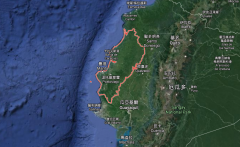
Manabi, the first Ecuadorian province to grow coffee, uses felling and burning to cut down local forests and then burn the remaining stumps and vegetation to grow coffee. Nearly 50% of Ecuador's Arabica coffee beans come from Manawi province, but because almost all of the coffee beans in this area are planted below 700 meters above sea level, there is no place to produce another flying place.

Taiwan coffee beans where can Taiwan grow coffee beans? Taiwan is suitable for growing coffee beans.
Taiwan is located in the subtropics, the territory is mountainous, and there is an obvious rainy season. As far as coffee is concerned, it is a good growing environment. Since the British introduced coffee trees during Guang Xu's time, the planting scale has been small. At present, there are still small-scale cultivation, including Huilin Farm (more than 1,000 meters above sea level) in Nantou Mountain area and Hebao Mountain (294 meters above sea level) in Yunlin Gukeng. The flavor of coffee by-products is similar.

Description of the Flavor of Coffee picking and growing process introduction to the Regional treatment of Coffee varieties
Coffee beans coffee trees begin to bear fruit about three to five years after sowing, and the next 20 years from the beginning to the fruit will be a high-yielding period. In order to facilitate harvesting, farmers usually control the pruning of coffee trees to about 2 meters, because if they grow too high, they have to climb a ladder to pick, which is not only time-consuming, but also may damage the tree by bending branches. Coffee trees need some tall shade trees to be planted together.

An introduction to the flavor and taste of the rich and mild Costa Rican San Roman Coffee Manor.
High-quality Costa Rican coffee is called extra hard beans, and this kind of coffee can grow at an altitude of more than 1500 meters. Altitude has always been a problem for coffee growers. The higher the altitude, the better the coffee beans, not only because the higher altitude can increase the acidity of the coffee beans and thus increase the flavor, but also because the night temperature at the higher altitude is lower, which can make the trees grow slowly.

The Development History of Coffee in China: the Development History of Yunnan Fine Coffee and the taste of small Coffee
Professional coffee knowledge exchange more coffee bean information please follow the coffee workshop (Wechat official account cafe_style) Chinese coffee Yunnan Yunnan is one of the earliest provinces in China to grow coffee. At the end of the 19th century, missionaries from Europe went to Yunnan Dali and other places to preach, bringing coffee seeds to Yunnan. In the early stage after liberation, Lujiangba in Baoshan was successfully planted, and it was found that the adaptability was good.

Coffee cherry dissects the appearance of fresh coffee beans coffee trees grow coffee cherry boutique coffee
The structure of the berry from the outside to the inside is the pericarp: the pericarp of the berry is tight and thick, which can bite through the fruit: mainly water and sugar, the fruit of the berry accounts for almost 80% of the coffee harvest and is often reused by the fertilizer mucus of the coffee producing area: a sweet, sticky, honey-like substance that covers the skin of the coffee bean: a thin white sheepskin paper layer, similar to peanuts.

Protect Panama, which develops coffee industry under the original ecological environment, and grow champion beans and coffee fragrance.
Professional coffee knowledge exchange more coffee bean information please follow the coffee workshop (Wechat official account cafe_style) country: Panama: Walken altitude: 1250-1800 m treatment: wine sun grade: SHB bean seed: Kaddura flavor description: wine, fruit juice, grape, longan as soon as it is ground, it gives off a very strong fruit wine aroma with fresh fumigated wood flavor

How coffee beans grow-an introduction to the history of coffee basics
Coffee is grown in 60 or 70 countries in the world, mainly in Asia, Africa and Central and South America. Sweet Home's main product is sweet and warm my heart coffee beans come from these high-quality producing areas. Famous coffee growers such as Brazil, Colombia, Indonesia and so on. Brazil is the world's largest coffee producer, accounting for 1/3 of the world's total output.

How long can the freshly baked espresso beans be stored? how long is the time to grow them?
How long the freshly baked espresso beans can be stored for several days because the beans are freshly roasted and the beans with medium and deep roasting degrees are more exuberant. When steaming, the carbon dioxide gas in the powder will be discharged after the hot water comes into contact with the coffee powder, causing the powder and powder to push and expand each other, forming the so-called hamburger state. Stale beans (above medium-deep baking degree), stewed

Introduction to the species and growing environment of coffee trees
Coffee trees can only grow in the tropics and subtropics. Coffee trees can grow in different climates, soils, elevations and rainfall in the middle of the coffee belt. Coffee trees thrive in the hot and humid canyons and forest rainforests of Africa; it still produces high-quality coffee beans in cold, foggy, windy Central America; and in the changeable climate, drought and torrential rain

Graphical planting techniques for the growth process and ripening process of coffee beans
There are four kinds of coffee trees in the world, but the coffee we drink now is mainly the fruit of two kinds of coffee trees, one is Arabica, the other is Robasta. Coffee trees in Arabica are not easy to grow, many are on high-altitude slopes, and picking needs to be done manually. But it is better than the balanced taste and coffee.

Introduction to the flavor description and taste characteristics of Robastian coffee beans
The Robusta coffee bean is originated in Congo, Africa, and its output is 20% 30% of the world's output. It is suitable for lowlands below 500 meters. It has strong adaptability to the outside world, can resist bad climate, resist diseases and insect pests, and can be allowed to grow in the wild. It is a kind of coffee tree that is easy to cultivate. It is generally used to make instant coffee Robasta coffee tree originating in the Congo of Africa.

Description of taste and flavor of coffee beans in Mount Meilu, Tanzania
Tanzania Coffee Bean Technology the main coffee producing area in Tanzania is located at the foot of Mount Kilimanjaro, which is rich in volcanic soil. Some coffee trees planted here are more than 100 years old. Coffee was first introduced by Christians from Kenya to grow coffee. Coffee trees must be carefully taken care of, weeded and fertilized. And the old branches must be cut off so that they can grow again.

Costa Rican coffee with light and pure flavor-origin introduction of boutique coffee beans
Costa Rican Coffee-Tarrazu in Costa Rica is one of the major coffee producers in the world, with a light and pleasant flavor. Costa Rica, with its fertile volcanic soil and good drainage, is the first country in Central America to grow coffee and bananas for commercial value. Coffee and bananas are the country's main exports. 1729
What conditions do you need to grow coffee trees? Introduction to the process from coffee tree planting to coffee bean harvest
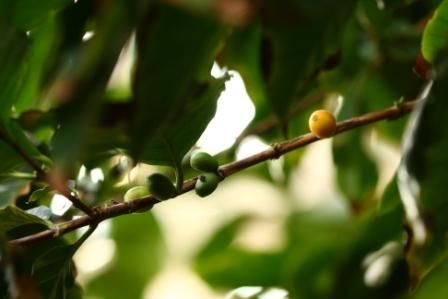
Coffee is a perennial evergreen shrub or small tree of Rubiaceae. It is a horticultural perennial cash crop with the characteristics of fast growth, high yield, high value and wide market. The planting conditions of Coffee Coffee is a perennial evergreen shrub or small tree of Rubiaceae. It is a horticultural perennial cash crop with the characteristics of fast growth, high yield, high value and wide market. Wild

In which area does Yunnan grow green coffee beans? Introduction to the characteristics of price and flavor
In which area does Yunnan grow green coffee beans? Price and flavor characteristics variety introduction in 1253, Kublai Khan led the army to cross the golden sand into Yunnan and destroyed Dali. In 1260, he was set up as the head of Dali. In 1274, Kublai Khan sent Saidian Chi, a Seymour, to support Siding. Since 1276, Yunnan Province has been established, and Saidenchi has been appointed as the official affairs of Yunnan Province (equivalent to the current provincial governor).

What are the producing areas of Yega Xuefei produced in Kebel Aricha processing plant to grow Yega Xuefei
Yega Xuefei is produced at the Kebel Aricha processing plant, where there are about 650,700 small coffee farmers who send ripe coffee berries here for processing in exchange for cash. After the treatment plant selects the available berries, they are directly exposed to the sun on the scaffolding and are turned every 2-3 hours in the first few days to prevent overfermentation. After four to six weeks of sun exposure, workers will look at the weather and temperature.
Grow coffee in the orchard
In April, I received samples of coffee beans and coffee seeds from my coffee friend in Yunnan, who specifically asked for the seeds to be planted in the orchard. Unfortunately, the spring in Qingdao is too long (perhaps the transition between winter and spring), finally hope that a relatively stable warm climate can finally sow coffee! Excited! Although when I went to the coffee producing area in Yunnan, I specially asked the coffee uncle about the method of sowing coffee.